From Garden Spike to Bathroom Shelf: The Aloe Torch Hustle
This plant already looks like it’s trying to sell you something. Thick, serrated green leaves radiate outward like a living rosette, tough and waxy, built to survive heat and neglect, while from the center rise these bright orange flower spikes, dense and almost architectural, like natural bottlebrushes catching full sun. The flowers aren’t soft or romantic; they’re confident, almost industrial in their repetition, each little tube packed tightly against the next. In the background, dry palm fronds and sharp light give it that Mediterranean–subtropical feel, the kind of place where plants work for a living instead of being decorative. This is not a fragile plant. That’s the whole opportunity.
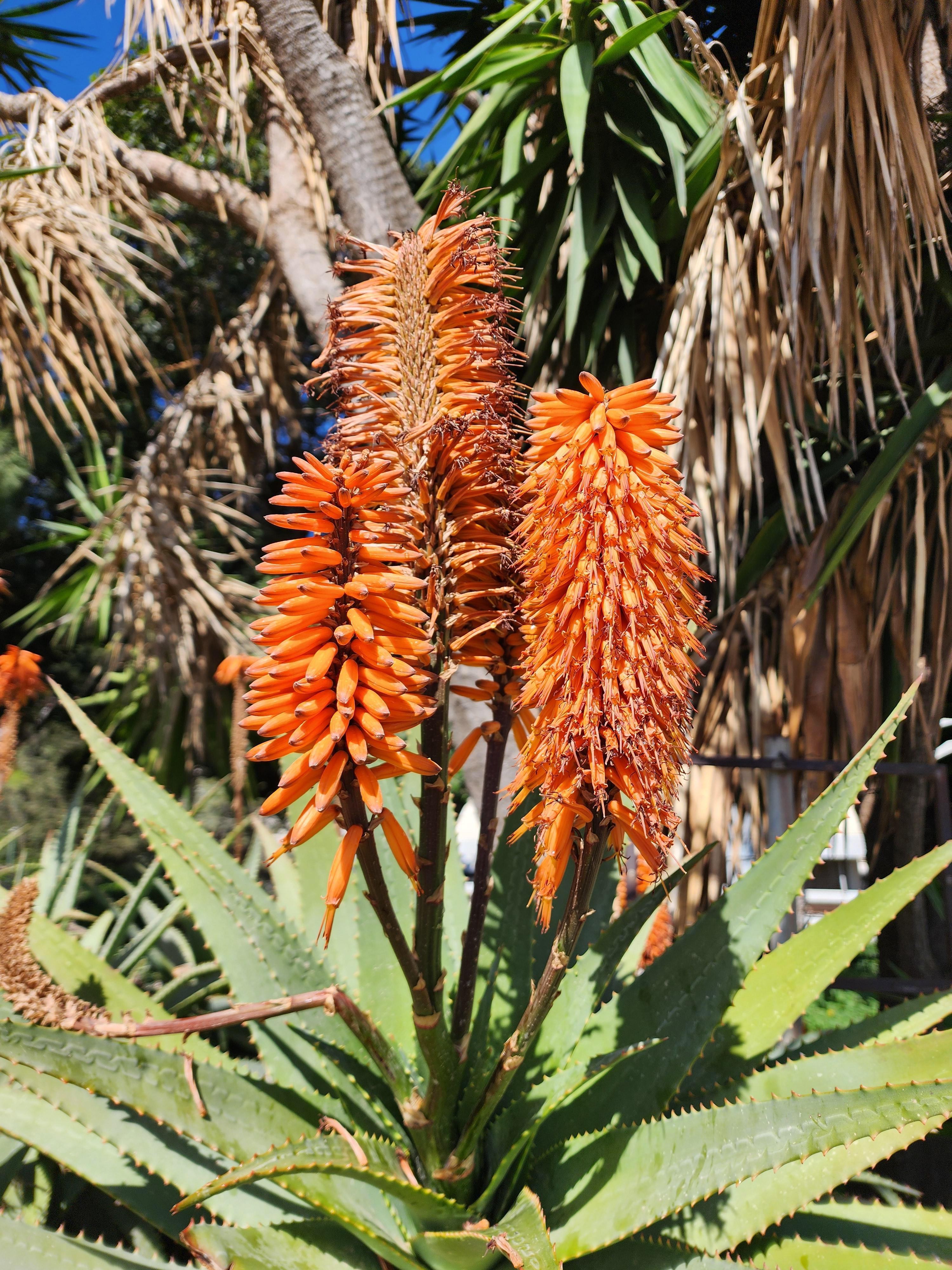
The side hustle here is a small-batch aloe-based skincare and utility line built around resilience and honesty, not luxury fluff. Think soap, creams, and after-sun balms, but marketed around the idea of plants that thrive when everything else dries out. Aloe varieties like this one are already associated with healing and skin repair, but most aloe products feel anonymous, squeezed out of industrial vats and hidden behind pastel branding. The angle is flipping that: showing the plant, the spikes, the sun, the toughness. You grow it yourself, or source it locally, harvest the leaves carefully, and turn the gel into a short, tight product line. One soap bar, one multipurpose cream, one after-sun or work-hands balm. Nothing more. Scarcity becomes a feature instead of a limitation, and suddenly “made from plants grown in harsh sun” sounds like a promise instead of a constraint.
Growing it is part of the story and part of the economics. Aloe doesn’t need rich soil, daily watering, or greenhouses. It scales slowly but predictably, which is perfect for a side hustle that doesn’t want stress. You can start with a dozen plants in containers, document their growth, the flowering cycle, the leaf harvest, and turn that process into content that feeds the brand. People trust products more when they’ve seen the source over time, especially when the source looks like this: sharp leaves, orange flames of flowers, zero pampering. Even better, aloe offsets grow naturally, so every mature plant quietly becomes two or three more, like compound interest, but botanical.
The soap and cream angle works because aloe gel plays well with simple formulations. You don’t need a chemistry lab, just discipline and consistency. Olive oil soap with aloe infusion. A basic aloe cream with beeswax or plant-based alternatives. No miracle claims, no “anti-aging secrets,” just honest uses: sun, dry skin, irritated hands, shaving, travel. That honesty matches the plant’s visual language. It doesn’t pretend to be delicate, so neither should the product. Packaging can stay minimal, almost utilitarian, letting the color and texture of the plant do the talking through photos and labels.
The real leverage, though, is stacking. You’re not just selling soap or cream; you’re selling the plant itself. Cuttings, starter plants, small pots for balconies, instructions for people who say they kill everything. Aloe is forgiving, and forgiveness sells. Someone buys a plant, then later buys the cream made from the same type of plant, then the soap. Suddenly you’re not running a product business, you’re running a tiny ecosystem. And ecosystems are sticky in the best way. People come back not because they need more soap immediately, but because they want to stay connected to something living, simple, and a bit sunburned in spirit.
This plant already signals durability, self-sufficiency, and usefulness without drama. That’s the hustle. Grow something that looks like it belongs outdoors, turn it into something that belongs in everyday life, and let the story stay as sharp and clean as those leaves.